
Newborn nursing of kitten
Pay attention to disinfecting the navel
Within a week, the navel of the milk cat may still have the remaining part of the umbilical cord. In order to avoid infection, the shoveling officer usually disinfects their umbilical cord with iodophor.
Breastfeeding is guaranteed
1. Newborn 1-2 week-old kittens can't eat less colostrum. Breast milk can make them get passive immunity and play a role in health protection. At the same time, breast milk is also a source of energy, which is suitable for puppies and cats with poor gastrointestinal function to absorb.
Do a good job of insulation and care
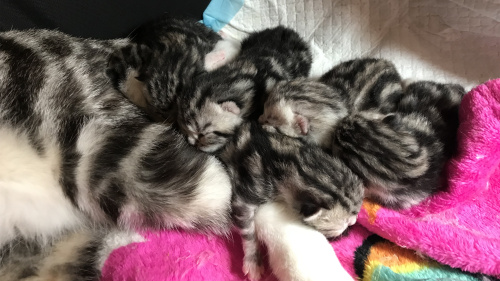
1. Kittens under three weeks old are unable to maintain their body temperature, so they like to huddle together for warmth. It is necessary to prepare a comfortable and warm nest and lay it with a soft cotton blanket.
Help TA defecate
The mother cat will stimulate the anus of the kitten with her tongue, so that the kitten will defecate. If the mother cat can't take care of it, the shoveling officer should take measures to help the kitten.
Choose your food during the weaning transition.
The kitten begins to be interested in solid food at the age of 4 to 8 weeks. If the breast milk is not enough, the kitten can be prepared for these feeds.
Kitten Food/Milk Cake Food Soak Soft Feed
The kitten food milk cake food is specially designed for the nutritional needs of this stage, but the milk cat's teeth are not yet fully developed, and the soft cat food is easy to eat and digest. Generally, it is soaked in warm water of about 40 degrees for more than half an hour.
Probiotics benefit the intestines and stomach
Young dairy cats have weak gastrointestinal function and are prone to diarrhea. Probiotics can be mixed with each meal to regulate the intestinal tract.
Special goat milk powder
Kittens have not been weaned before 8 weeks of age, and may face insufficient breast milk, so milk powder must be prepared at this stage, can not directly feed human milk powder, not suitable for the physiological structure of the cat gastrointestinal tract, it is easy to lactose intolerance, pet goat milk powder is a good choice.
Nutritional cream is fed on demand.
Weaker kittens can be fed with nutritional cream to quickly supplement nutrients, and kittens under 6 weeks of age should not be fed with nutritional cream unnecessarily to avoid diarrhea.
Transitional feeding method
From the age of 4 weeks, kittens begin to learn to eat complementary food, which can change from paste, semi-solid to solid.
Feeding frequency
1. Kittens should pay attention to eating less and more meals every day. Generally, it is better to feed 4 to 5 times. After 8 weeks of age, they can be fed 3 to 3 times a day.
Protection after weaning
Completely weaned
At 8 weeks,
Start the vaccination
8-week-old kittens can start vaccinating. Remember to deworm the kitten one week before vaccination. Kittens before 8 weeks of age must not be bathed, nor during vaccination, in order to avoid cold and illness, need to wait for all vaccinations before bathing oh.